Editorial
The hidden problem with sleep data.
Why averages hide the signal in sleep data, and the case for variability-aware metrics in fitness apps that want sleep features users feel.
Read the article →Sleep intelligence for fitness platforms
Sleep.ai is the complete sleep data platform for fitness apps. Ingest data from 500+ wearables, apps, and devices. Fill coverage gaps with PSG-validated sonar and smartphone-based tracking. Turn the result into the recovery, coaching, and outcome signals your platform delivers to users.

“By integrating Sleep.ai’s intelligence layer into HearMe, we give individuals a more complete understanding of themselves—not just how they feel but why they feel that way.”
Time asleep
8h 0m
Total duration 8h 30m
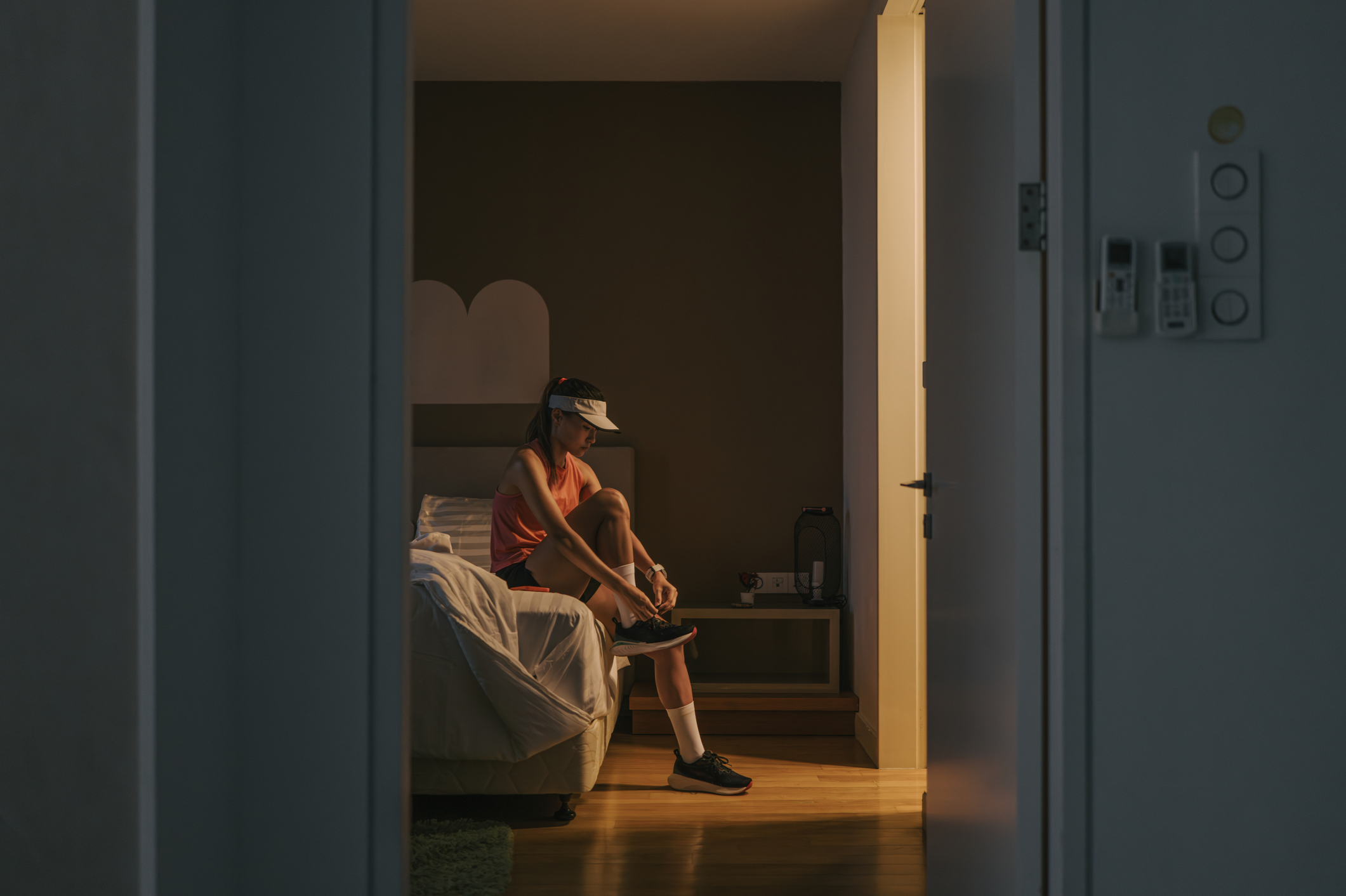
Sleep decides whether the workout works.
Recovery, performance, and adherence all live downstream of sleep. Get sleep right and the rest of your platform’s outcomes follow.
What Sleep.ai does
Sleep.ai gives fitness app product, engineering, and data teams a single source of truth for sleep. We pull data from any wearable, fill coverage gaps with PSG-validated sonar and smartphone-based sensing, harmonize the result into a benchmark dataset, and turn it into the recovery, coaching, and outcome signals your platform can act on.
The problem
The outcome problem
Users start a fitness program, follow the plan for a few weeks, then watch their progress stall. Engagement craters. Premium tier conversion slows. Health outcome metrics flatten. Sleep is the variable most fitness apps have not touched, and it determines whether the workouts and nutrition produce the results your users signed up for. It’s also a daily reason for users to open your app, even on days they don’t work out.
The data problem
Most fitness apps already pull data from wearables. The harder problem is the data itself. Wearable sleep signals vary widely between and within devices. Coverage gaps come from many directions: users without a wearable at all, users who own one but don’t wear it to bed, and travel or charge nights for everyone else. Audio-based fallbacks are unworkable for most users because nobody wants their bedroom recorded. Any sleep feature, recovery score, or coaching prompt trained on raw wearable output inherits all of that noise.
10s–100s%
Variability in wearable sleep data between and within devices.
85–95%
Of wearables that aren’t worn at night, even by users who bought them.
93%
Of users for whom audio-based tracking is a privacy non-starter.
The Sleep.ai Intelligence Platform
The full Sleep.ai stack covers every step from raw signal to user outcome. Most fitness platforms start with one or two components and expand as the roadmap matures.
01 / Measure
Three ingestion paths into one harmonized dataset. Every user, every night, regardless of what hardware they own.
Sleep Connect
Collect sleep data from 500+ wearables, apps, and devices, seamlessly.
Sleep Detect
Enable wearable-free sleep tracking using PSG-validated sonar sensing.
Sleep Sense
Transform any smartphone into a trusted automated sleep sensor.
Sleep Harmonize
Standardize sleep data from every source into one gold-standard dataset.
02 / Interpret
Raw sleep data becomes outcome signals your platform can act on: what helps users sleep, recover, and stay healthier. When users feel the difference, the business signals follow. Engagement compounds. Retention sticks. Conversion scales.
Sleep Lens
Turn sleep data into actionable individual and cohort-level signals across health outcomes, recovery, and platform performance.
03 / Activate
A sleep score with no follow-up is just another number. Sleep.ai gives your platform a way to act on what the data shows.
Sleep Coach
Deliver personalized, science-backed coaching adaptable to every user.
Sleep Screen
Assess sleep disorder risk in home, powered by validated screeners and AI models.
Sleep Care
Successfully navigate at-risk users into trusted sleep disorder care pathways.
Who builds with Sleep.ai
Three categories of fitness and health platforms that already build with Sleep.ai, and the specific platform components each one leans on most.
Fitness and workout apps
Even engaged wearable users skip nights. Sleep Connect ingests data from 500+ wearables, apps, and devices. Sleep Detect fills gaps with PSG-validated sonar sensing. Sleep Sense uses the user’s smartphone as an automated sensor. Sleep coverage stops being a function of perfect user behavior.
Recovery and performance platforms
Wearable sleep data varies 10s to 100s of percent between and within devices, so any recovery or readiness model trained on raw wearable output inherits the noise. Sleep Connect ingests data from 500+ wearables, apps, and devices. Sleep Harmonize standardizes it into one benchmark dataset. Sleep Lens turns the result into the cohort and individual signals your models depend on.
Digital coaching and health platforms
Reading sleep data is the easy part. Sleep Coach delivers personalized, adaptive coaching grounded in sleep science. Sleep Screen flags at-risk users with validated screeners. Sleep Care routes them into trusted disorder pathways. The data becomes a coaching loop your users feel.
Trusted by leading health and wellness brands


Thought leadership
Three pieces of Sleep.ai research and writing that have shaped how fitness app product teams think about sleep data quality, coverage, and validation.
Editorial
Why averages hide the signal in sleep data, and the case for variability-aware metrics in fitness apps that want sleep features users feel.
Read the article →Whitepaper
A technical whitepaper on Sleep Sense, the smartphone sensing approach that gives fitness apps sleep coverage for users who do not have or do not wear a wearable.
Read the whitepaper →Research
Findings from the AgeTech Collaborative by AARP showing that consumer preference shifts measurably toward health products that carry independent scientific validation.
Read the findings →For technical teams
Sleep.ai is built for engineering teams that need clean, validated, low-latency sleep data they can ship into production confidently.
Accuracy
94% sensitivity vs. polysomnography for Sleep Detect (contactless sonar). Sleep Connect harmonizes data across 500+ wearables, apps, and devices into one consistent format.
Latency
Sub-second API response times across all endpoints, designed for in-session product experiences and real-time coaching.
Supported platforms
iOS and Android SDKs, web and server-side REST integrations, plus pre-built data connectors for the major wearable ecosystems.
Authentication
OIDC for user identity flow. Supports custom claim schemas and platform-managed user provisioning.
Data freshness
Sleep records available within minutes of session end. Historical data backfill supported on integration.
Regions and compliance
ISO 27001 certified, GDPR compliant, regional data residency options. ZPP-certified for reimbursement across 74M publicly insured lives in Germany via Dein Schlaf.
Built on validated sleep science
Sleep.ai is the data layer most fitness platforms wish they had built. Every integration draws on the same foundation.
~1B
Hours of real-world sleep data
The largest naturalistic sleep dataset in the world, collected from real users in their own bedrooms across years of continuous monitoring.
500+
Wearables, apps, and devices via Sleep Connect
One integration, every major device ecosystem. Sleep Connect ingests data from anything your users wear or use, harmonized into a consistent format.
94%
Sensitivity vs. polysomnography
Contactless sonar sensing, productized as Sleep Detect, validated against the clinical gold standard for sleep measurement.
Frequently asked
Sleep.ai’s contactless sonar sensing technology, productized as Sleep Detect, has been validated against polysomnography in published research with 94% sensitivity for sleep detection in healthy sleepers. Sleep Connect ingests data from 500+ wearables, apps, and devices, then Sleep Harmonize standardizes the output into a benchmark dataset that stays consistent across source devices.
Most fitness platforms integrate Sleep.ai’s APIs within days. Authentication uses OIDC, response times are sub-second, and the data layer is platform-agnostic. Engineering teams typically run a working proof of concept in the first week and ship to production within a sprint or two.
No. Sleep.ai supports three sleep tracking paths and you can use any combination of them. Sleep Connect pulls data from any of the 500+ wearables, apps, and devices your users already use. Sleep Detect provides contactless sonar sensing that works without any worn device. Sleep Sense turns the smartphone the user already has into an automated sleep sensor. Sleep Harmonize then standardizes the output into a single dataset.
Sleep Sense is one of Sleep.ai’s data sources. It turns the user’s smartphone into an automated sleep sensor, designed to give fitness apps sleep coverage for users who do not have or do not wear a wearable. The Sleep API is the broader platform layer your engineering team integrates with, which includes Sleep Connect, Sleep Detect, Sleep Sense, Sleep Harmonize, Sleep Lens, and the activation products. Sleep Sense flows into that platform alongside the other measurement components.
Sleep.ai pricing is based on volume of users and which platform components you use. Most partners start with Sleep Connect plus Sleep Lens, then add Sleep Detect, Sleep Sense, or the activation layer (Sleep Coach, Sleep Screen, Sleep Care) as the product roadmap expands. Talk to our team for a quote tailored to your user base and roadmap.
Yes. Sleep.ai is ISO 27001 certified and GDPR compliant. The platform also holds ZPP certification for reimbursement across 74 million publicly insured lives in Germany via Dein Schlaf, a regulatory bar that exceeds typical SaaS compliance requirements.
Build with Sleep.ai
If sleep is the variable your fitness platform has not yet solved, we should talk. Sleep.ai gives product, engineering, and data teams the data foundation, the interpretation layer, and the activation layer to ship sleep features users feel and recovery models the team can trust.
~1B
Hours of real-world sleep data
250+
Scientific studies
100+
Peer-reviewed publications
74M
Covered lives via Dein Schlaf