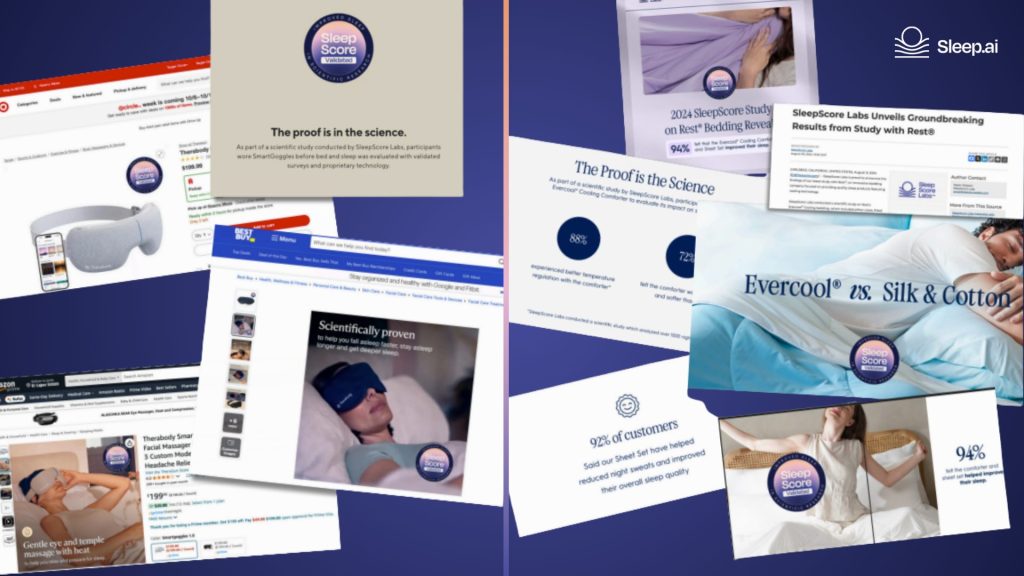
When brands invest in scientific validation, they often focus on the study itself: the methodology, the metrics, the seal. But the real commercial power of validation doesn’t live in the study. It lives in how the results are translated, integrated, and activated across the customer journey.
A well-executed validation study is a strategic growth lever. And when properly deployed, it becomes one of the most powerful assets in your marketing ecosystem. The difference between validation that sits quietly on a science page and validation that drives measurable revenue comes down to one thing: activation.
Your Study Is the Source. Your Claims Are the Sales Engine.
At its core, validation provides objective proof that your product performs as promised. That proof gives you something most brands struggle to claim convincingly: measurable differentiation.
But differentiation only works if it’s visible. If your validated results are buried in a PDF or mentioned once in a press release, they are not doing their job. Consumers don’t dig for proof. They respond to what is clearly, consistently, and confidently presented to them.
Validation marketing is the process of translating study results into compelling claims and ensuring those claims are reinforced everywhere your brand shows up. When done correctly, validation becomes the backbone of your messaging strategy.
Where Validation Creates the Most Impact
A validation study gives you authority. Strategic placement gives you influence.
1. Your Website: The Conversion Core
Your website is where curiosity turns into commitment. If validation does not appear prominently, particularly above the fold on your homepage and product detail pages, you are leaving conversion lift on the table.
A visible validation seal, paired with a clear and specific claim, immediately reframes the way a customer evaluates your product. Instead of asking, “Do I believe this brand?” they begin asking, “How does this compare to the other options?”
That shift matters. Validation should shape:
Your homepage credibility band
Product detail page headlines and icon rows
Comparison charts
Your “Why Us” positioning
FAQ responses
Science or methodology pages
When validation is integrated thoughtfully, it doesn’t feel like a badge; it feels like a standard.
2. Paid Media: Turning Proof Into Performance
In paid channels, attention is scarce, and skepticism is high. Generic descriptors like “premium,” “advanced,” or “innovative” have little impact. Objective claims perform differently.
A measurable outcome, whether it’s a reduction in nighttime awakenings or an improvement in sleep quality, signals seriousness and it differentiates instantly in a feed full of adjectives.
When validation is incorporated into:
Google Search copy
Shopping ads
Meta creative
YouTube pre-roll
Retargeting campaigns
…it does more than increase credibility; it increases efficiency. Click-through rates improve because the message feels grounded. Conversion rates improve because the promise feels substantiated.
Proof outperforms hyperbole.
3. Lifecycle Marketing: Reinforcing Trust Over Time
Trust is rarely built in a single moment. It compounds with every touchpoint a consumer encounters your brand.
In welcome sequences, nurture campaigns, SMS messages, and abandoned cart flows, validation provides reinforcement. It reminds customers that their decision is supported by measurable results.
The more often a consumer sees objective proof aligned with your brand promise, the more durable that trust becomes.
4. Retail & Packaging: Winning at the Shelf
In retail environments, decision-making is compressed. Consumers compare products quickly, often with limited context.
In that moment, validation acts as a shortcut.
Packaging, hangtags, inserts, shelf talkers, and point-of-purchase displays should act as critical conversion touchpoints. When a validation seal or claim is visible on the box, it reframes the comparison entirely. Side-by-side, the product with objective proof carries more weight.
Validation shifts the question from “Which looks better?” to “Which is proven?”
Translating Data Into Claims That Convert
Not all validation messaging is equally effective, and the difference lies in interpretation. A study alone does not persuade, a data table does not convert, and even a powerful result can fall flat if it’s presented without clarity, context, or strategic framing.
Validation creates potential energy, and proper translation turns it into momentum.
The brands that see measurable lift from scientific validation are distilling them into clear, relevant, benefit-driven claims that customers immediately understand. They bridge the gap between technical measurement and everyday impact. They move from “what was measured” to “why it matters.”
Here’s how to do that effectively.
Clarify Why It Matters
A statistic alone is rarely persuasive. Context is what makes it powerful.
For example, stating a measurable reduction in nighttime awakenings is helpful. Explaining that reducing nighttime awakenings is strongly correlated with next-day energy and alertness makes it meaningful.
Consumers don’t just want the data; they want to understand the impact.
Be Specific, Not General
“Scientifically tested” is vague.
“Independently validated for measurable improvement in sleep quality, including reduced nighttime awakenings” is concrete.
Specificity signals authenticity, and it shows that the claim is rooted in real methodology rather than marketing language.
Combine Objective and Subjective Results
Objective data provides authority, and self-reported improvements provide relatability.
When consumers see both measurable outcomes and participant feedback, the story feels complete. It satisfies both the rational and emotional sides of decision-making.
Make Validation Visually Central
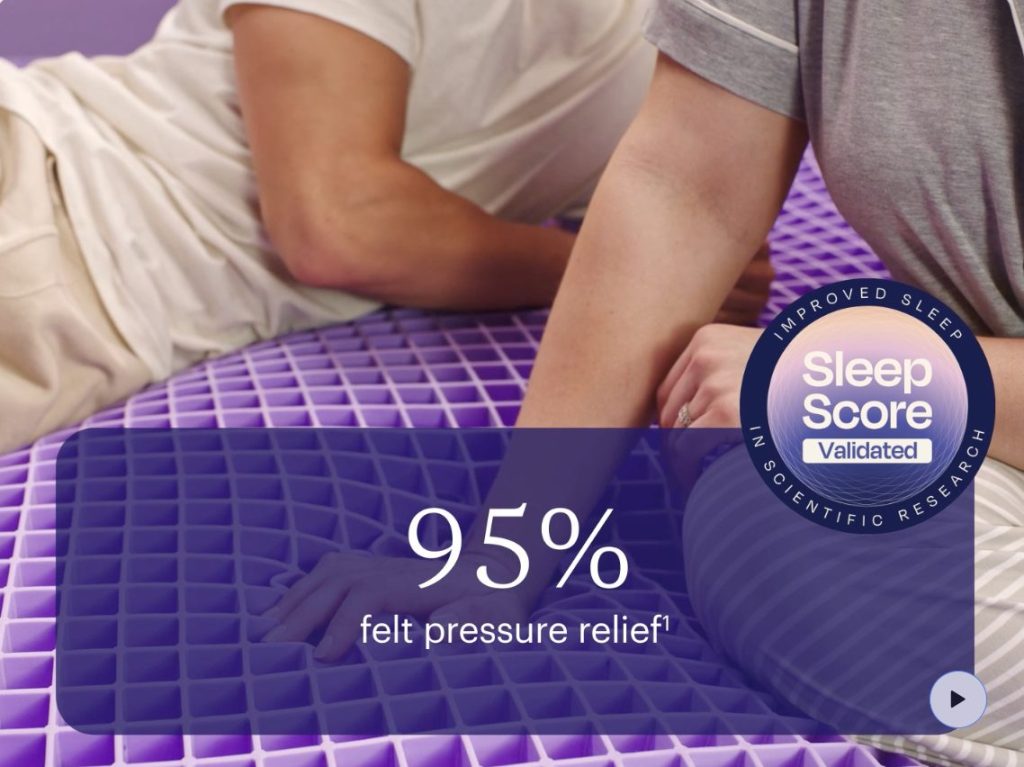
Placement influences perception. When a validation seal is integrated into your hero imagery or headline structure, it communicates that science-backed performance is foundational to your product promise.
Visibility shapes hierarchy, and hierarchy shapes belief.
Use Video to Humanize the Science
A concise, 45–60 second explainer from a scientist or research lead can dramatically increase comprehension and trust.
When someone explains what was measured, why it matters, and what the results mean for real-world use, the study becomes accessible, and accessible science converts.
Validation as Your Competitive Advantage
When validation is activated consistently across channels, it strengthens your positioning.
Brands that integrate validation deeply often see:
Improved advertising efficiency
Higher on-site conversion rates
Stronger retail sell-through
Greater pricing resilience
More defensible differentiation
In competitive health, wellness, and consumer technology categories, credibility is currency. Validation, when fully deployed, becomes a moat.
Taking Your Claims from Study to Strategy
Earning validation is only the first step. The brands that realize the greatest commercial return are those that treat validation not as a seal, but as a strategic messaging pillar.
When your study becomes the foundation of your claims, and your claims are integrated across every customer touchpoint, validation stops being a supporting detail.
It becomes your advantage.