Blog
Validation Marketing: Why Your Study Should Be Your Strongest Sales Asset
When brands invest in scientific validation, they often focus on the study itself: the methodology, the metrics, the seal. But…
Introducing SleepScore
We deliver accurate data, actionable insights, personalized coaching and proven outcomes your customers need.
Sleep Insights
Last Published on 26th October 2021 by SleepScore Labs
The sense of smell is often the most overlooked and under-appreciated of the five basic senses. It triggers memories and emotions long-forgotten, alerts you of danger, boosts your productivity, helps you decide whether a particular food should taste nice or not, influences your mood and behavior, and may also help you get a good night’s rest. The sense of smell makes everything come alive and makes living enjoyable. Some even describe it as the most intimate of all the senses.
Some questions that may be running through your mind: Can scents promote sleep? What scents may help you fall and stay asleep? How exactly do you use these scents? Are there scents you should avoid when sleep is a priority?
Let’s answer your questions.
One term that always pops up every time the power of scents is in conversation is “Aromatherapy.” For us to understand the link between scents and sleep, we also have to include it in our discussion.
Aromatherapy is a combination of two words: Aroma, meaning a pleasant scent, and therapy, which means healing. The National Center for Complementary and Integrative Medicine describes aromatherapy as a complementary health treatment method that uses essential oils from plants to manage conditions and potentially improve health and wellbeing. Numerous studies suggest that aromatherapy may also help improve sleep health. Interestingly, some experts say that aromatherapy is a natural way to heal the mind, body, and soul.
A person can inhale the fragrances from the oils or massage them in their diluted form to the skin.
Aromatherapy for enhancing relaxation, wellbeing, and sleep is the most popular complementary and alternative medicine, reported in approximately 4.5% of US adults.
But the link between the scents and sleep isn’t well-studied, and mainstream science largely views it as anecdotal. Still, let’s take a look at what available research on the connection between sleep and scent says.
An older and small study in 31 people investigating whether inhaling scents from essential oils may improve objective sleep quality found that essential oils (lavender) may promote deep sleep in all genders. Although deep sleep was improved, the study also found that REM sleep was reduced and light sleep was increased in women.
According to another study, aromatherapy helps promote relaxation and sleep because inhalation of the fragrances from essential oils may trigger the production of serotonin and endorphins (feel-good hormones), which activates the parasympathetic nervous system (the rest and recovery part of the nervous system) in the body. Meanwhile, endorphins also produce sedative effects, and serotonin aids with the release of melatonin (the hormone released at evening time to prepare your body for sleep)—all of these mechanisms work together to help support sleep.
Another study mentions that following the inhalation of lavender in adults who were asleep, slow-wave sleep (SWS), a restorative sleep stage, increased. The study suggests that lavender aroma may be a quick, safe, and effective way to improve sleep quality and potential intervention for managing insomnia. What’s more, a 2012 study found that inhaling lavender reduces blood pressure, heart rate, and skin temperature, inducing the body to a relaxed state.
Research suggests that inhaling lavender, ylang-ylang, and chamomile brings calm to the body and supports sleep. Still, other fragrances may also help with sleep, so let’s take a look at some of the scents validated by research.
1. Lavender
Lavender oil is the most talked about and well-studied essential oil for improving sleep quality. Also, it is claimed to be the least toxic and allergenic essential oil.
A 2012 study explored the effects of applying lavender aromatherapy for 12 weeks on sleep quality and heart rate variability in women with insomnia. After 12 weeks of aromatherapy, the women saw significant improvements in self-reported sleep quality.
Lavender aromatherapy was also found to be effective in improving self-reported sleep and managing anxiety symptoms in patients with coronary artery disease in a 2015 study. The study also recommends it as a “non-invasive, inexpensive, easily applicable, cost-effective, independent nursing intervention” for cardiac patients and could be applied in intensive care units.
2. Chamomile
According to Molecular Medicine Reports, chamomile is one of the most ancient medicinal herbs traditionally used to promote calm and relaxation. Similarly, an animal study on the effects of chamomile on sleep-disturbed rats suggests that it produces a hypnotic effect similar to benzodiazepine, a class of drugs that may be prescribed for treating a range of health conditions, including anxiety and insomnia. However, more research is needed to assess its effects on humans.
3. Rose
Rose is a popular fragrance that many use to smell good. But they can also help ease the body and prepare it for an efficient sleep.
A study exploring the effects of rose aromatherapy on the sleep quality in patients in a coronary care unit found that it may promote better sleep. Likewise, a 2014 study suggests that rose may positively impact mood and sleep quality in people with depression.
4. Ylang-Ylang
Although not as popular as rose and lavender, Ylang-Ylang may also support sleep.
A 2019 study found that Ylang-Ylang, mixed with lavender and bergamot, significantly improved the sleep quality of those who inhaled these essential oils compared with the placebo group.
5. Neroli
Research suggests that neroli, along with other essential oils, may support self-reported sleep quality. Also, another study found that people who inhaled 0.5% of neroli oil had lower blood pressure and heart rate than the group that inhaled 0.1% of neroli oil. These findings suggest that inhaling neroli may help the body wind down for sleep.
You may apply these scents by directly or indirectly inhaling them (which experts say is more effective) or by massaging the essential oils in their diluted form into the skin.
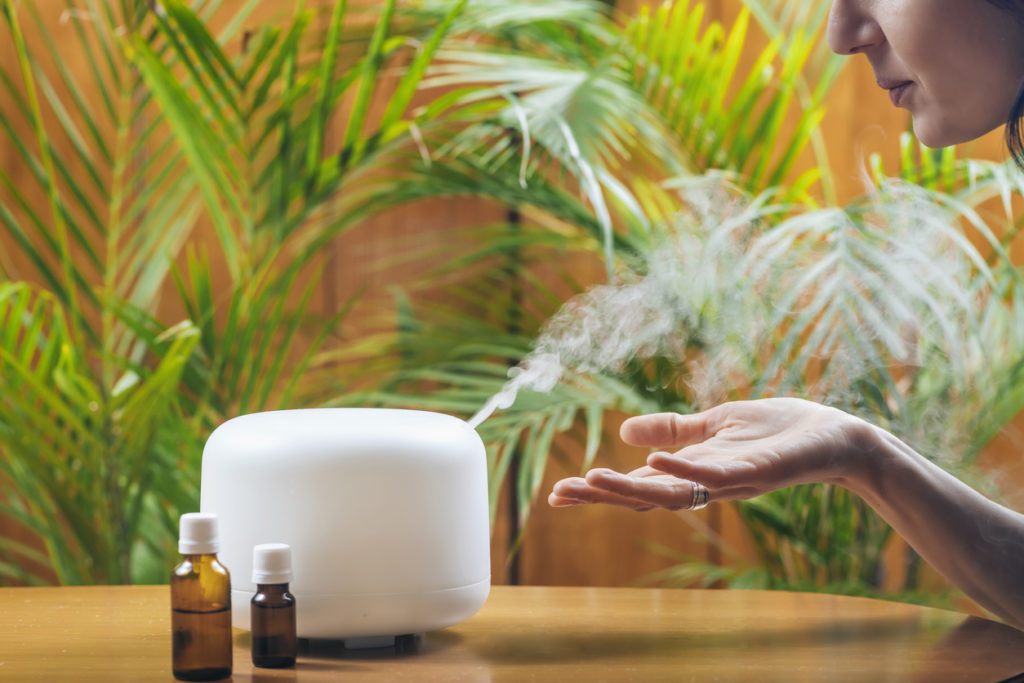
Indirect inhalation: Here, the essential oil is put in a diffuser or humidifier, and the person inhales what the diffuser or humidifier emits in the air.
Massage: The essential oil is diluted with a carrier oil like coconut oil or jojoba and massaged into the skin.
According to the National Cancer Institute, the Food and Drug Administration (FDA) recognizes essential oils are generally safe to use with minimal risks or side effects when a person uses them as recommended.
Some scents may trigger allergic reactions and skin irritation when applied directly to the skin for an extended period.
Also, it’s best to avoid stimulating essential oils like frankincense, peppermint, and lemon, during evenings, to prevent the body from being up and alert when it should be winding down.
While the future of scent and sleep research is still to be determined, it’s clear that fragrance can produce positive impacts on our overnight rest. What’s worked for your sleep? Tweet us at @sleepscore!