The Breakthrough That Makes Sleep Data Finally Scalable
New Frictionless Inference Model Launching Dec 2025
Sleep Sense expands sleep measurement into nights when devices go unworn, providing the continuous, representative nightly boundaries needed for stronger models, insights, and digital health experiences.
Sleep is essential. Sleep data is inconsistent.
Most consumers try sleep tracking but don’t sustain nightly use, and device accuracy varies widely across brands and form factors.
This creates inconsistent baselines and fragmented datasets, making it difficult for product and commercial teams to deliver reliable insights, personalized experiences, or scalable outcomes.
~36%
have tried a sleep tracker
10-15%
track sleep nightly
85%
of nights go unmeasured
Close the Measurement Gap with Sleep Sense
Sleep Sense identifies when a person falls asleep and wakes up by analyzing everyday signals from the smartphone, trained using large, scientifically validated sleep datasets.
This gives organizations complete nightly sleep boundaries across their full user base, without wearables, charging, or nightly user effort.
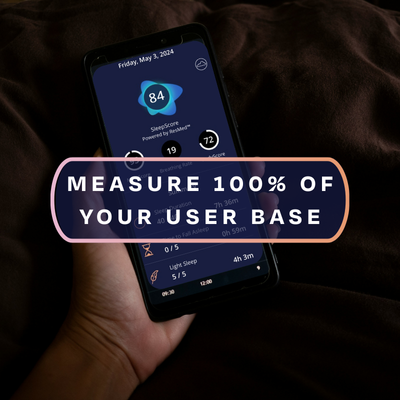
No wearables required to track
Relies on everyday smartphone signals to identify nightly sleep boundaries without requiring a device on the body.
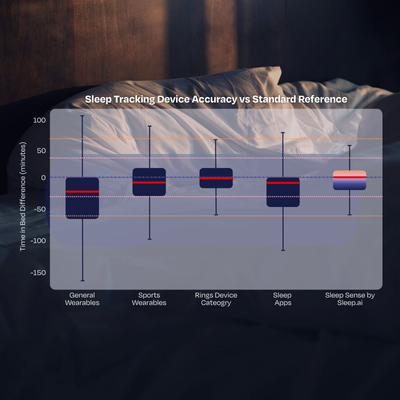
Validated data accuracy
Benchmarked against large scientific reference datasets to ensure accuracy comparable to leading consumer sleep trackers.
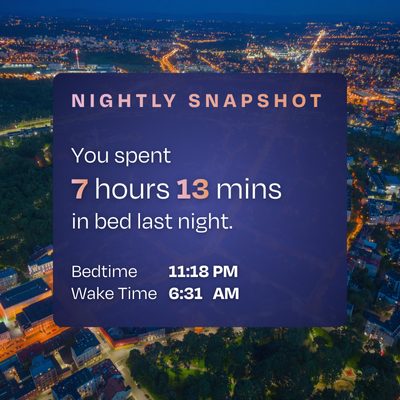
Designed for enterprise scale
Built to deliver consistent, representative sleep data across entire populations and product ecosystems.
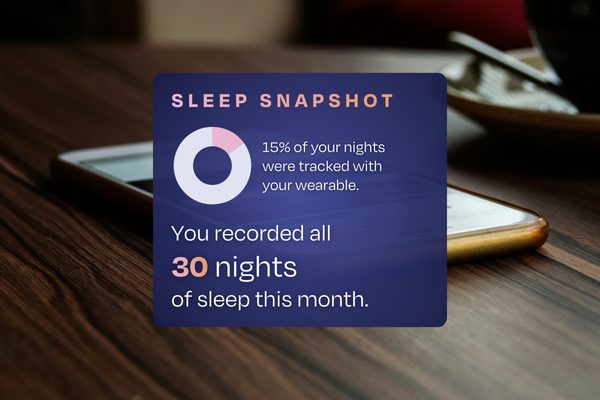
Behavioral & Smartphone Signals
Sleep Sense analyzes patterns already present in everyday smartphone use—such as nighttime device inactivity, movement dynamics, ambient light changes, and typical evening/morning routines. These behavioral and sensor-based signals provide a rich proxy for understanding when someone goes to bed, falls asleep, and wakes up, even when no wearable is used.
Because these patterns appear across virtually all smartphones, Sleep Sense works consistently across users and environments.
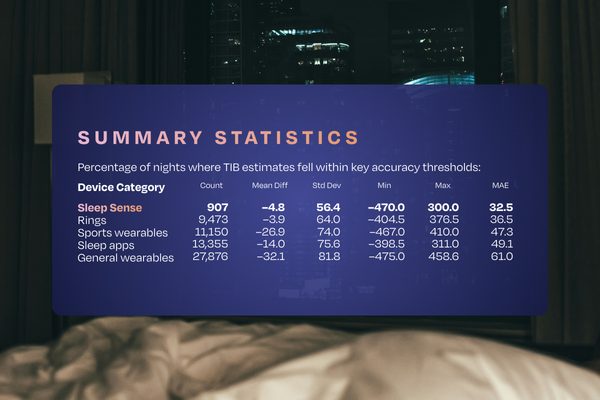
Scientifically Validated Training Data
The Sleep Sense model is trained using large-scale sleep datasets paired with scientifically validated reference labels, including data grounded in polysomnography. These reference intervals teach the model how true sleep–wake transitions behave in the real world, enabling accurate boundary detection across different populations, phone types, and operating conditions.
This scientific anchoring ensures the model generalizes well beyond the small subset of people who wear sleep devices nightly.
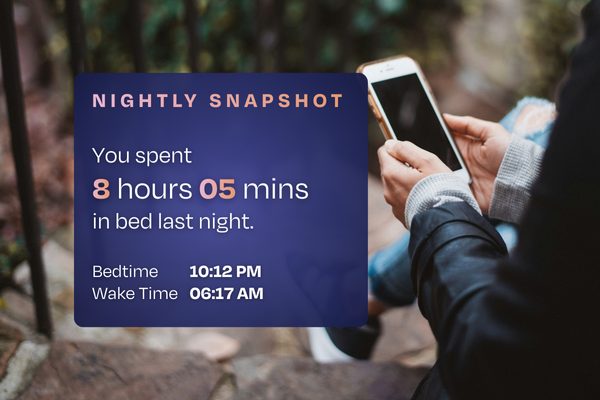
Deep Learning for Boundary Detection
Sleep Sense uses sequence-based deep learning architectures optimized specifically for identifying sleep–wake transitions—the points where many consumer devices struggle most. These architectures integrate behavioral rhythms, multimodal sensor cues, and long-term behavioral context to pinpoint sleep boundaries reliably.
By focusing on foundational sleep parameters and the moments most impacted by real-world friction, the system delivers accurate nightly boundaries without requiring users to change their habits or wear additional hardware.
Bring Population-Scale Sleep Insight Into Your Platform
Learn how Sleep Sense can complement your existing ecosystem and deliver continuous sleep boundaries across your entire user base.